Tuesday, September 24, 2019

What Grade Are You In?

The saga of our little Atlantic Salmon continues.  It is time for “Fall Grading.”

In August we had the mid-summer split (see August 9, 2019 blog “Splitting Fish …”).  Fall grading is a lot like mid-summer split but with an extra step in the process.

You start by putting on waders because you are going to be in the tank with the fish and the water is about 63 degrees.


There is a lot of equipment to be set up. 


This is where the difference between “mid-summer split” and “fall grading” starts.  During fall grading the fish in each outside pool are separated into two groups - large fish and small fish.  To do this, bars are used in the crowder that allow the small fish to swim through while keeping the large fish inside the crowder.

Bar panels on the left. 
Panels to hold smaller fish on the right.

Mark and Jarret start crowding the fish.


The small fish are encouraged to swim through the grate.


All that is left is the larger fish.  Sometimes a few of the small fish refuse to leave.


The large fish are weighed and moved to an empty pool.  The large fish average 16-17 to a pound.

Each net full of large fish is weighed.

Large fish are moved over to an empty pool.

After the crowder is emptied of large fish the panels are replaced with much small grates and the small fish are then crowded, weighed and moved to an empty pool.  The smaller fish averaged about 32 fish to a pound.

Large fish have all been weighed and moved.

Any small fish that made it through the crowding get rounded up.

Panels have been replaced for smaller fish.
Smaller fish have been crowded, weighed, and moved.
Any remaining smaller fish are rounded up and moved.

After the pool is emptied all the equipment is moved to the next pool and the process begins again.

 Mark moving scales to the next pool.

The large fish are retained for smolt production.  The small fish are stocked as parr in early October.

Monday, September 23, 2019

What Are The Winters Like?

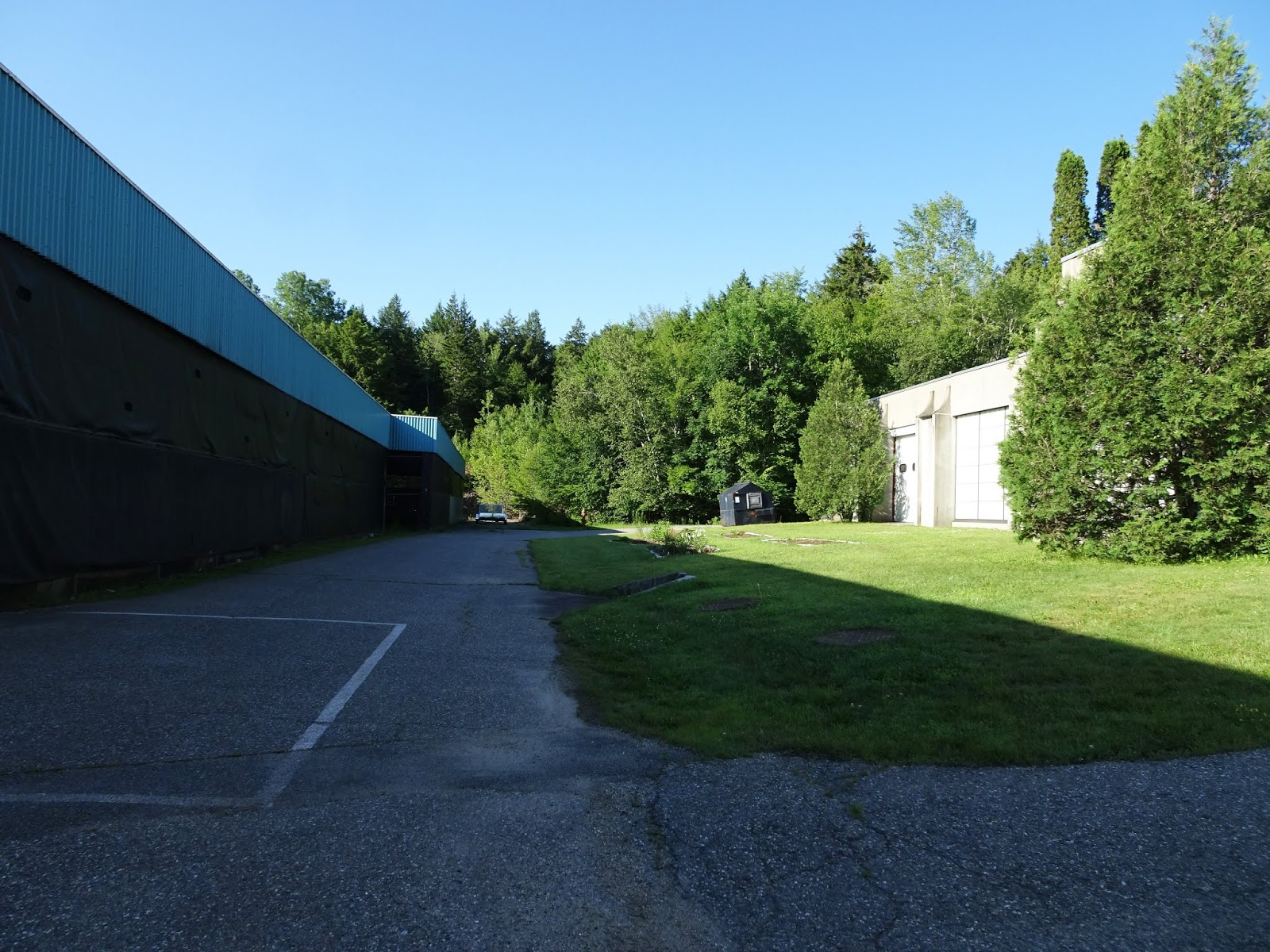
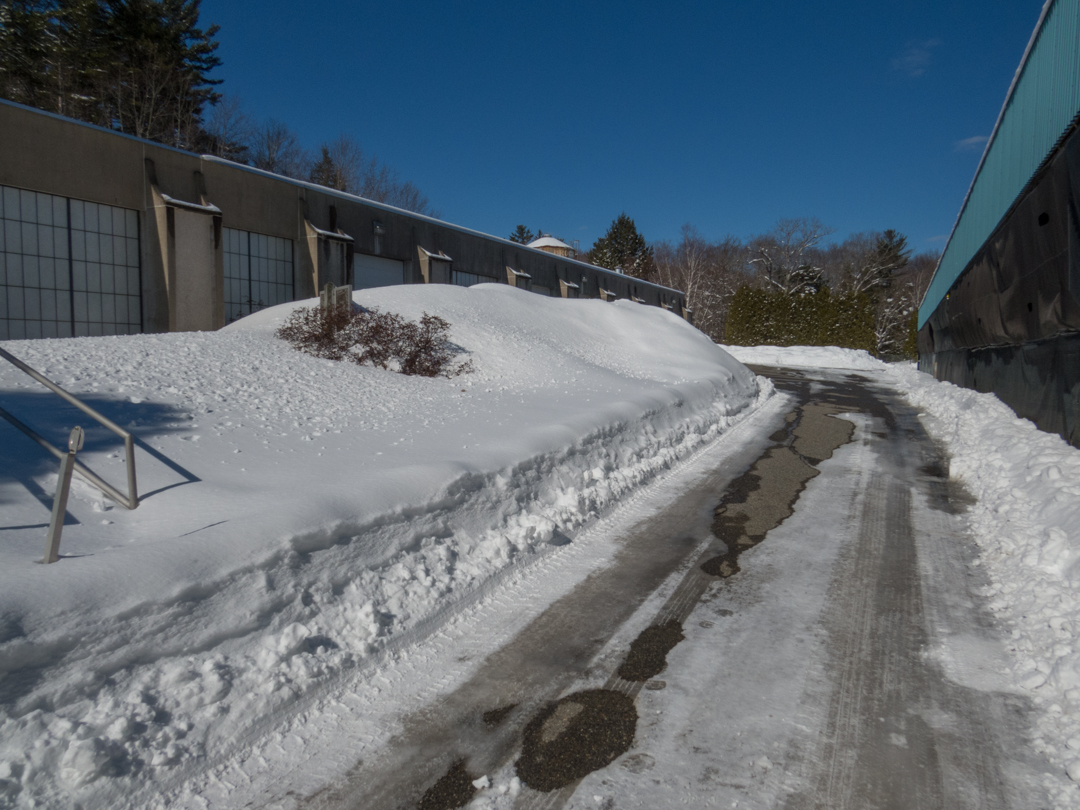
One of the biologists (Fred) sent us pictures of the hatchery from this past winter.

This summer I took pictures standing in approximately the same places.

This area receives 70 inches of snow a year.


 Happy First Day Of Autumn!

We'll be gone before the snow starts.
 

Friday, September 20, 2019

Monarch Success

Our pollinator gardens started out slow this year but are ending with a bang!  We have raised many Monarch butterflies.

We have planted a lot of Milkweed in our pollinator gardens.

Milkweed

I saw a Monarch landing here and there on the milkweed and found a lot of eggs.

Monarch egg

It wasn’t long before little baby caterpillars started hatching.


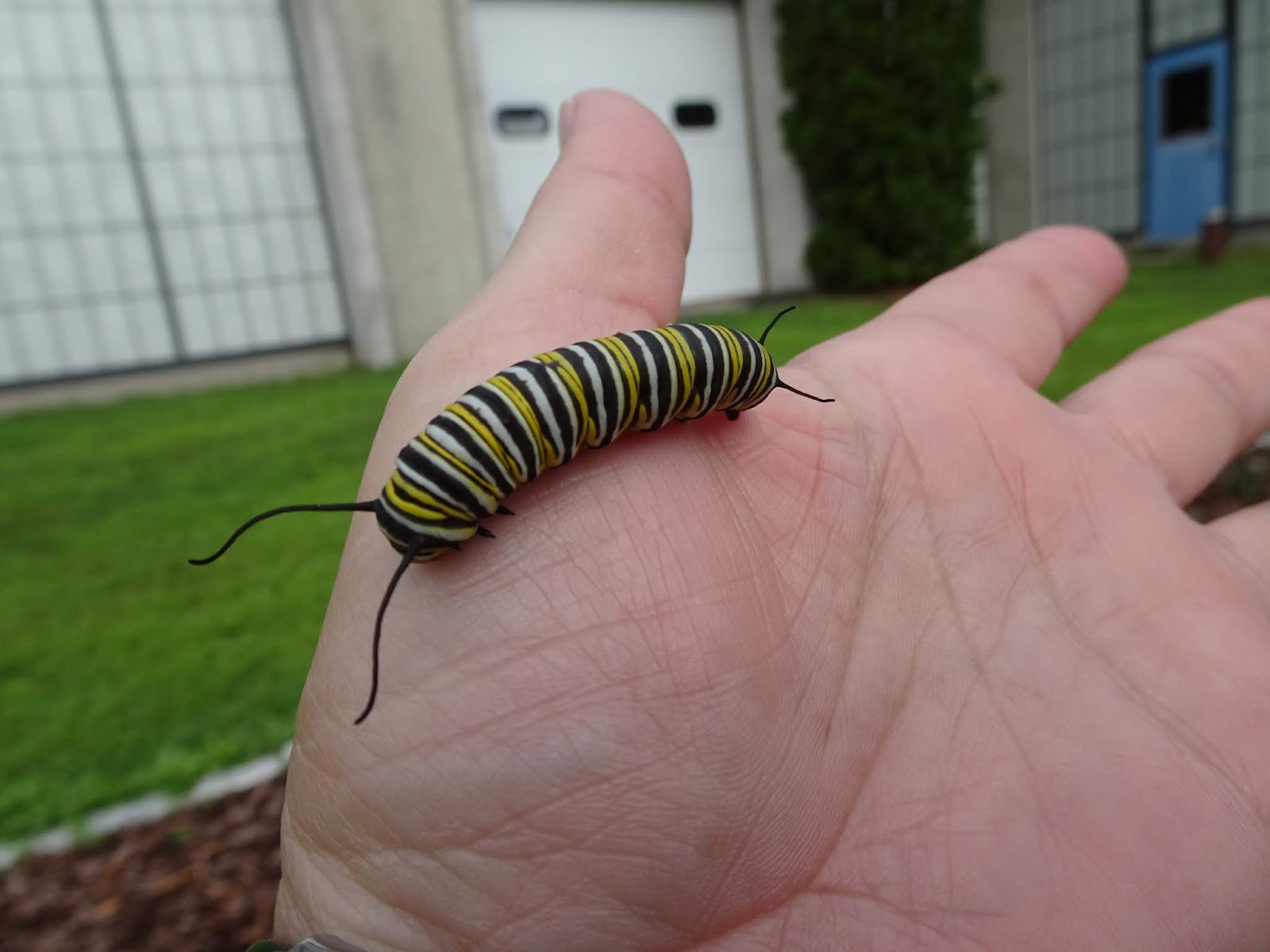
Pretty much all they do is eat and poop - a lot.  It wasn’t long before we had caterpillars everywhere! 

Healthy caterpillars

Lots of milkweed for them to eat.

They are eating the milkweed pretty fast!

One plant completely eaten.


We’re going to need more plants!

No leaves are missed.

The last plant in this garden bed.

Our caterpillars are big and healthy.

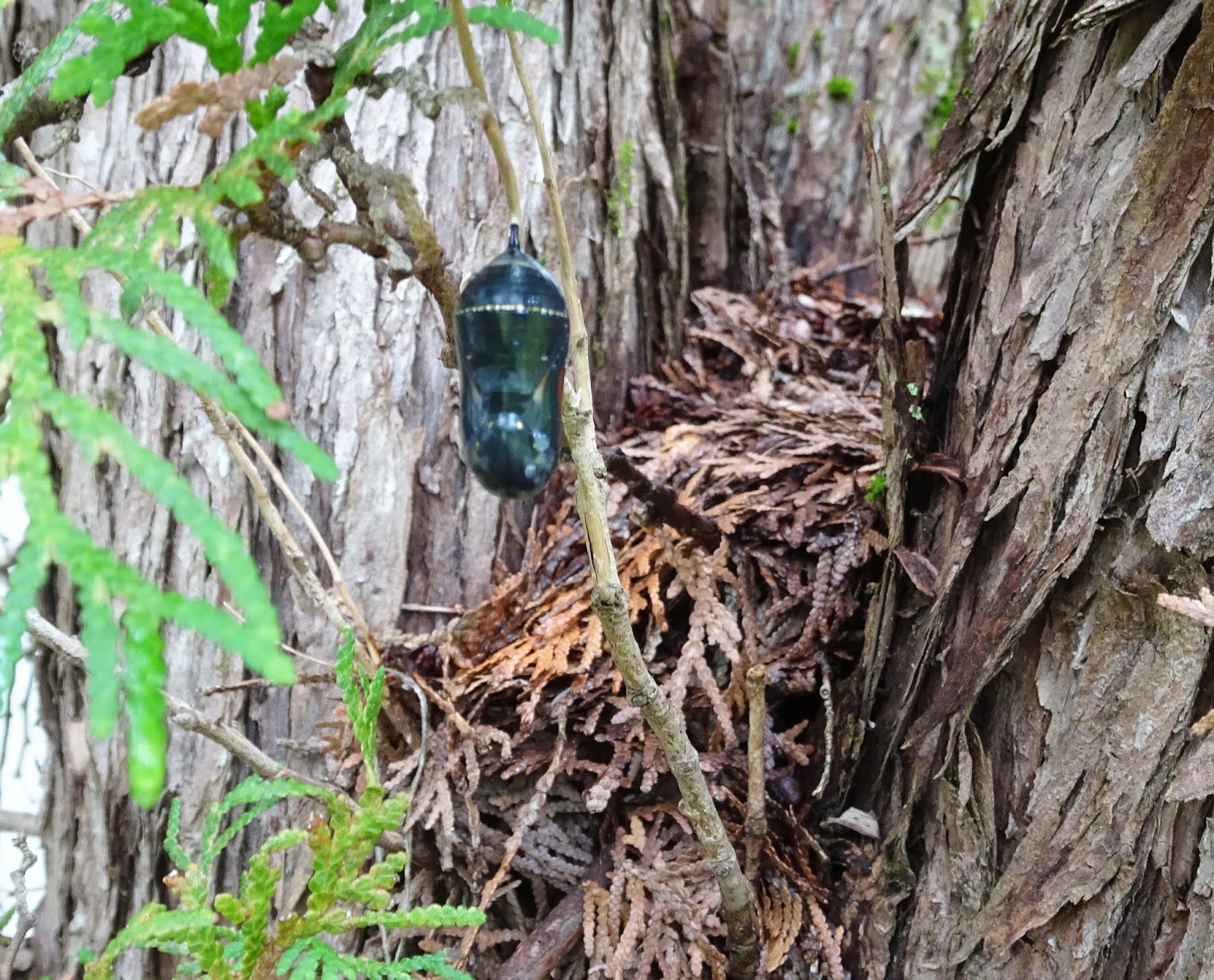
Mark found our first chrysalis.

It's inside this cedar tree.


Even the staff came out to take a look.


We started find chrysalis’ everywhere.


The 10 days of the chrysalis phase is a time of rapid change.  The old body parts of the caterpillar are undergoing a remarkable transformation, called metamorphosis.

Wing showing

Turning dark

Almost time to emerge.

We have a beautiful Monarch butterfly!


They aren’t all Monarchs - we also have beautiful Painted Ladies.


We have been very successful raising these beautiful creatures.

Wednesday, September 18, 2019

Going Back In Time - Aroostook

Way back in 2011 we volunteered at Aroostook State Park in Presque Isle, Maine.  (See May - September 2011 blog).  We decided to drive on up, play a little disc golf, and see how the area has changed in 9 years.

Presque Isle is a three-hour drive from Green Lake NFH.  The weather was nice and clear so we stopped along the way to see Mt. Katahdin.  It has to be a pretty clear day in order to see it from the I-95 scenic overlook.


Katahdin is the highest mountain in Maine (5,267 feet).  The name means The Greatest Mountain.  It’s located in Baxter State Park and is the northern terminus of the Appalachian Trail. 

The Maine Solar System Model extends 40 miles along US Route 1.  In 2011, I blogged about these planets and had pictures of them all.  We only stopped at a couple this time through. 


Mark wasn’t playing disc golf in 2011 and this course wasn’t put in until 2015 so this was a new course for him.  It’s a nice course and he enjoyed playing it.


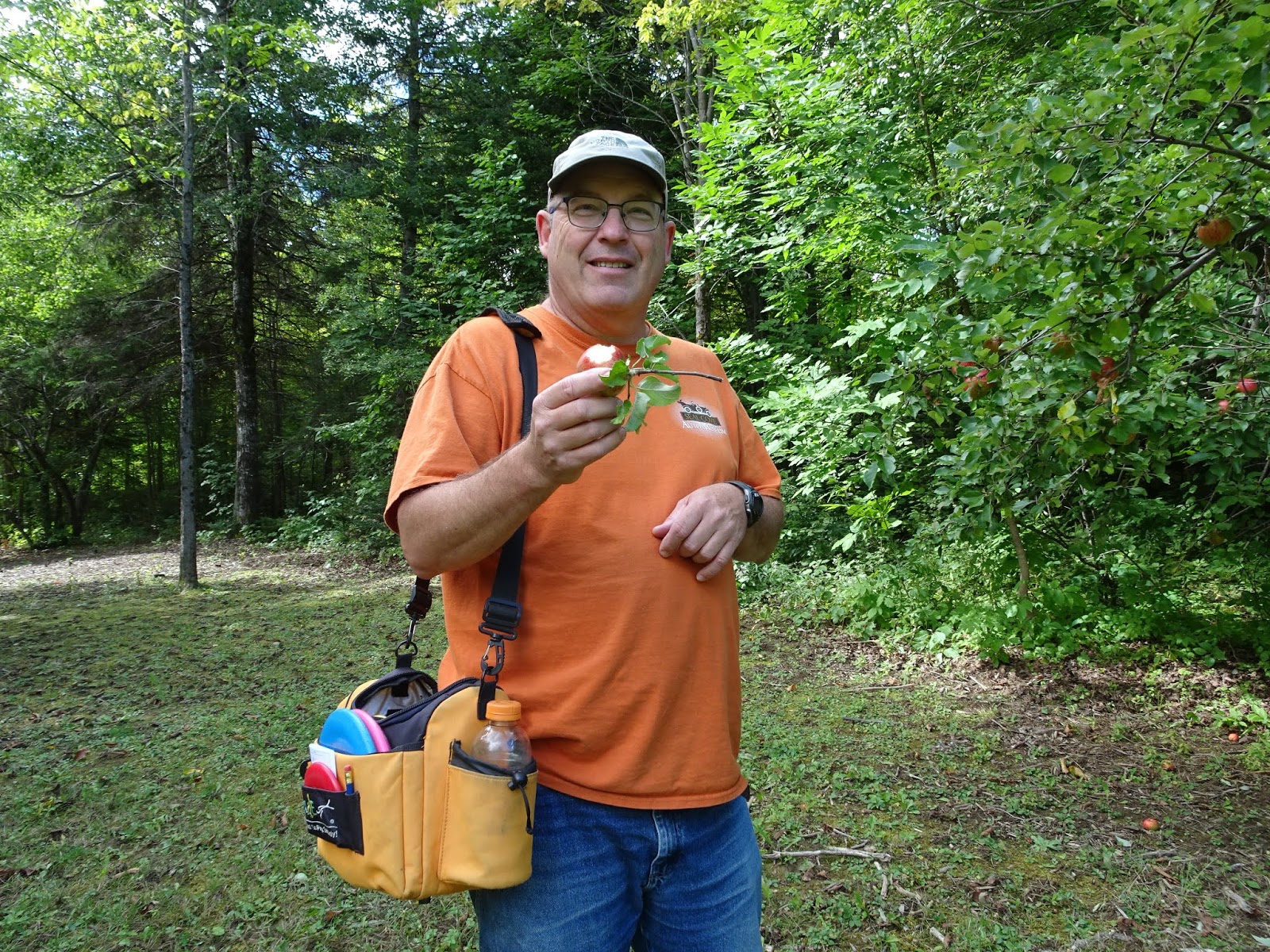
This land used to be a cattle farm.  Apparently, cattle ate apples and left apple seeds all over the area.  We saw over 100 apple trees and they were all loaded with apples. Mark tried a couple but found them to be hard and sour. Perhaps they weren't ripe yet. 


Our next stop was Aroostook State Park. 


This was our first “Park Host” position and we quickly realized that we didn’t care to be “park hosts” again.  Cleaning sites, painting flag poles, checking restrooms are fine with us, but it was the worst 5% of campers that made us decided park hosting wasn’t for us. 

Our old RV site.

We spent many evenings on Echo Lake fishing for horn pout (See July 10, 2011, blog).


We found Scott (the manager).  He was the manager in 2011.  We spent about an hour catching up with him before heading to lunch.

This is a very pretty park.

We found the same restaurant we had visited many times (Governor’s) and had a nice lunch before heading to our hotel.

The Aroostook National Wildlife Refuge is about a 45-minute drive from Presque Isle.  In 2011 we visited this refuge a couple of times and met their hosts (Sharon and Bill). We kept in touch through our blogs (Sharon wrote a blog until about 2 years ago).  We lost touch with them after they bought a house in Mexico and quit blogging.  We were surprised when Sharon left a comment on our blog about visiting them in Aroostook if we had the time this year.

It turns out they were flying back to Mexico the very next day so we quickly drove to the refuge for a short visit.

It was fun catching up.

The next morning we got up early to visit a couple of birding sites we had visited many times in 2011. Lakes Josephine and Christina were created to hold the sludge from food processing plants in the area, and are rich in nutrients. So they have a lot of insects and vegetation, and attract a lot of birds. We weren't here at the best time of year, but we saw a few birds. 

Common Yellowthroat

Yellow-rumped Warbler

Hooded Merganser juvenile

After another 18 holes at Maple Ridge we started back home

Maine farmers grow 320,000 acres of potatoes producing 13 billion pounds and most of them come from Aroostook County.

We saw many of these little stands along the road.


We bought a 5 pound bag of reds.

We had a fun short trip and headed back home.