Friday, November 3, 2023

Colombia 2023 - Day 6

8/27/2023 Sunday

We headed out at 6:00 to bird the dirt roads below Soatá.  It was nice to be birding only five minutes from the hotel for a change! This area was at a lower elevation than we'd been previously, and was warmer and drier. 


This area had a few endemic species that were our targets for the morning. We found the Apical Flycatcher, Chestnut-bellied Hummingbird and Niceforo’s Wren pretty easily, though all views of the Chestnut-Bellied Hummingbird were fleeting. 

Apical Flycatcher

Niceforo's Wren

Niceforo's Wren

As we stopped and birded on the rural roadways, it was interesting to see the locals going about their daily lives. I wonder what they thought of us, as tourism is quite rare in these areas.


We also enjoyed looks at larger and flashier wren, the Bicolored Wren as well as Black-faced Grassquit, the very long-tailed Squirrel Cuckoo, and a hovering White-tailed Kite. 

Bicolored Wren

Black-faced Grassquit

Squirrel Cuckoo

White-tailed Kite

It was quite sunny and warm so we returned to the hotel at 10:30 for a break, and headed off for lunch at 12:30.  Had an outstanding lunch at a local restaurant. Teri had a grilled chicken breast, while I had the same with mushrooms. But mine came in a delicious white cream sauce and was by far the best meal of the trip. 

At 2:00 we went to a private garden called Mango Matcho. The owner wasn't there, but Daniel knew the local lady who looked after the residence and arranged entry for us. The gardens were lovely, but the main draw was a line of 34 hummingbird feeders! 

And they were covered with Chestnut-bellied Hummingbirds and Indigo-capped Hummingbirds, both endemic to the area. The setup provided great opportunities for photos. 

Chestnut-bellied Hummingbird

Chestnut-bellied Hummingbird

Indigo-capped Hummingbird

Indigo-capped Hummingbird

Less common at the feeders were Sparkling Violetear, Black-breasted Mango, Rufous-tailed Hummingbird and the tiny White-bellied Woodstar.  

Sparkling Violetear

Black-breasted Mango - female

Rufous-tailed Hummingbird

White-bellied Woodstar - male

After an hour at the feeders we took a road toward the town of Boavita, but birding was slow. We made several stops looking for Striped Cuckoo and got some return calls and one brief look by Mark.  

We ended up in the small town of Boavita where Daniel wanted to have an ice cream in the town square. But the square was completely fenced off and looked torn up from what we could see. We bought a couple of ice cream bars and sat near an enormous church overlooking the square.  Saw a tame Cattle Tyrant picking up whatever food scraps it could, along with Carib Grackles which have only recently colonized some of these towns. Best birds of the afternoon!

Staying in and visiting these small Colombian towns was interesting, and a great way to get the true feel of the country and the culture. 

After returning to Soatá we had dinner at same place as the previous evening. With our late afternoon ice cream we weren't too hungry, so I had a ham and cheese sandwich and Teri snacked on some of my fries. 

Next: Up into the mountains and a new hotel. 

Thursday, October 12, 2023

Colombia 2023 - Day 5

8/26/2023 Saturday

We were out on the balconies at 6:00 to check out the dozen or so hummingbird feeders hanging from the eaves. 


They were busy and we quickly picked up Black Inca and Lazuline Sabrewing, both lifers. 

Black Inca

Lazuline Sabrewing

It took a bit longer to see the Short-tailed Emerald, another lifer. But that one didn't cooperate for a picture!

After a quick breakfast we walked down the entrance road, calling for a Mustached Brushfinch which is supposed to be very reliable here. But it was strangely quiet and we didn't get an answer. 

We walked out to the main road and tried again with the same result. This looked like very nice forest but the birds just didn't seem to be around. 

We did get to see a few Grassland Yellow-Finches in the more open grassland on the other side of the road. 

Grassland Yellow-Finch

We returned to the lodge and hiked a few forest trails. They too were quiet, though I did spot another Black Inca sitting in a bush. I always prefer hummingbird pictures on natural perches rather than at feeders. 

Black Inca

We departed the lodge at 10:30, with the host giving Teri a magnet with the lodge name and a Black Inca on it. That will go onto the refrigerator at home. On the drive out Daniel stopped on a bridge over a small stream and we found a Torrent Tyrannulet, a small flycatcher that lives beside rivers and streams. 

Torrent Tyrannulet

We had lunch at 12:30 at a place that serves traditional East Llano food, a country soup and grilled meats. As we entered a huge vertical rotisserie over an open fire was loaded with different meats. 

We each had a big bowl of the soup and then they delivered a platter with about 3 pounds of grilled meat, sausage, potatoes, Yuca, etc.  It was a lot!  Some of the meat was very good but some was pretty dried out. Our heaviest lunch so far by a long shot.


We then headed toward Soatá, a several hour drive. We broke it up by stopping at a few places up on the Paramo. We found many different species, but never managed to find the rare hummingbird called the Green-bearded Helmetcrest.

Black-tailed Trainbearer - male

Grass Wren

Plain-colored Seedeaters - female & male

Rufous-browed Conebill

Andean Siskins

As we were exploring back roads in the highlands, we saw several large potato fields. One was being harvested. 


We arrived in the town of Soatá about 6:00 to find that the electricity was out!  It was still light enough to check into our nice hotel mid-town and get our bags up to the room. 

The power came back on at about 6:30. We headed out to dinner, also stopping for fruit and bread for tomorrow's breakfast as these small hotels don't have restaurants or any type of food. 

Next - Birding around town and a private hummingbird garden. 


Friday, October 6, 2023

Colombia 2023 - Day 4

8/25/2023 Friday

We enjoyed breakfast at the same local café as yesterday, and then headed to Parque Puente Sopo, a nice mixed activity municipal park. 

Our main target was the endemic Bogota Rail. Rails are notoriously secretive marsh birds, and this one is found in only a few locations around Bogota. The previous "go-to" spot on private land had a new owner and visitors were no longer welcomed. Daniel had heard that this public park might have them and so we were here to give it a try. 

There was a walking trail that circled a marshy pond area, and we set off along this trail. Within just a few minutes we spotted a rail making its way through the marshy grass, and sure enough it was a Bogota Rail. 


Bogota Rail

There were several Bared-faced Ibis working the same area as the Rail, and a couple of Silver-throated Spinetails (another endemic) in the shrubs next to the water. 

Bare-faced Ibis

Silvery-throated Spinetail

Another section of the park had a large open pond where we saw Andean Ducks, which are very similar to the Ruddy Ducks found in the US. At one time they were considered to be the same species. 

Andean Duck - male

Andean Duck - female

Once we finished at the park we headed to a place called Laguna de Fuquene, arriving around noon. The target for this location was a small brown bird called the Apolinar's Wren, an endemic with a small distribution in Central Colombia.  

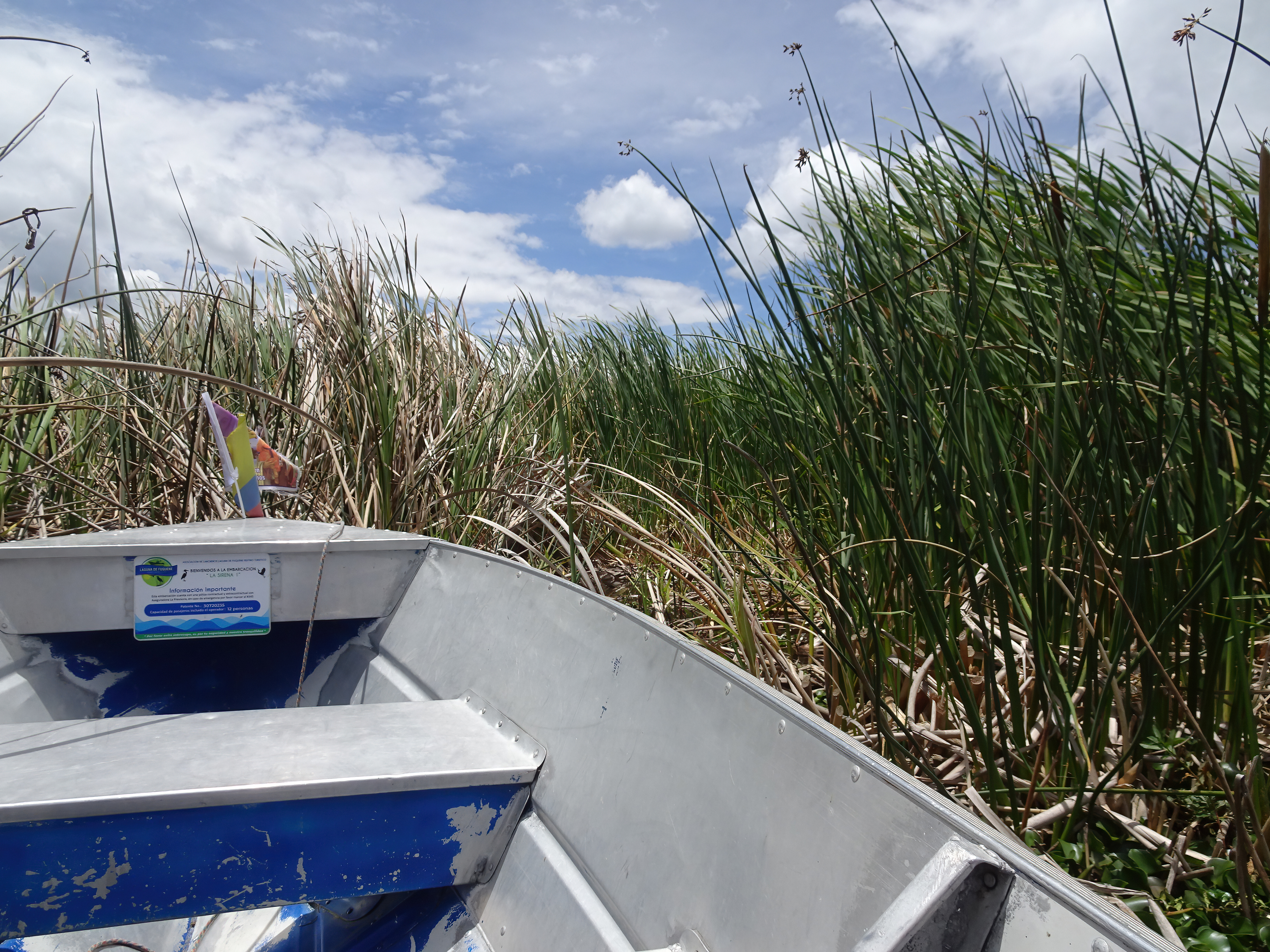
Daniel mentioned the possibility of trying to find this bird from shore, but when we arrived we saw that a program to remove invasive Water Hyacinth had really torn up the shoreline. So Daniel went to Plan B, hiring a boat to take us out to less disturbed areas. 

As we waited near the dock we spotted a rare Spot-flanked Gallinule, a bird commonly found in Chile, Argentina and Southern Brazil, but with a small presence in Colombia. We were lucky to see it.


Spot-flanked Gallinule

We headed out in the boat, finding that it was very windy which made birding tough. We did a lot of trolling alongside reeds, playing calls. 

Here birdy, birdy...

We heard a couple of birds answering back, but no sighting. We did finally get short glimpses of two different birds, but no pictures. 

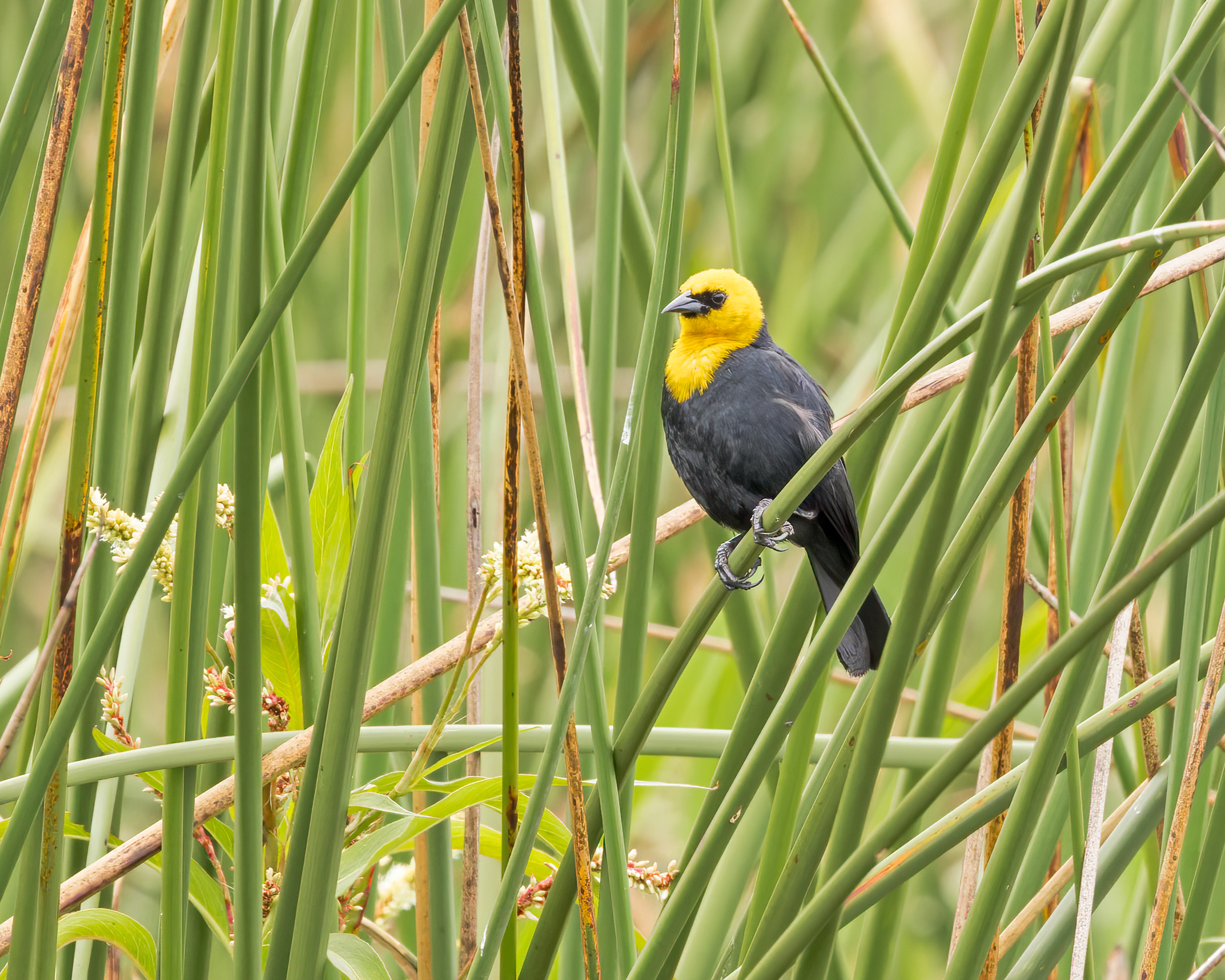
While we were out we found a few Yellow-hooded Blackbirds, which are virtually identical to our Yellow-headed Blackbirds. 

Yellow-hooded Blackbird - male

On the other hand, we also saw American Coots, which are the same species we have in the US, but these look a little different with a yellow area on their bill.

American Coot

We had some driving to do after finishing up at the lagoon. We stopped at 2:00 for lunch at a roadside sandwich stand, and then at 4:30 in the Villa de Leyva town plaza for coffee/hot chocolate at a sidewalk café.  The 3.5 acre plaza is the largest in Colombia and one of the largest in South America. Most town squares are more parklike with grass and trees, but this one was entirely stone. Perhaps the high elevation here was a factor?


We finally arrived at Rogitama Lodge at 6:00.  This is a property owned by a retired doctor who has taken what was originally a cow pasture and restored it to forest over the past forty years. 

It had been a long day with a lot of driving, so we were happy to get into our warm, comfortable beds. 


Next - Two new hummingbirds and another new hotel.