Monday, June 24, 2019

If You Build It, Will They Come?


One thing we like so much about volunteering at this hatchery is that there are a variety of projects for us to do.

There are fish projects: feed fish, clean tanks, etc.
There are people projects:  hiking trails, tours, etc.
There are maintenance projects: mowing, painting, lots of motors for tune ups and oil changes, etc.
There are critter projects: pollinator gardens, etc.

A very fun project for us is building bluebird houses.  We’ve built many bluebird houses during our volunteer time and always enjoy it.

The hatchery has some old, rough-sawed, lumber stacked up and we were asked to use it to build bluebird houses.

Normally old wood is hard to use because it’s uneven, warped, rotted, etc.  BUT - we had a wonderful machine at our disposal.  A planer.  I’m not sure why the hatchery has a planer but we made good use of it!

This lumber is 12 feet long.  Much too long to work with.


We cut off the bad ends leaving us with a 7-foot piece to work with.


This wood is rough.


In addition to the planer that is probably 40+ years old, the hatchery just purchased a fabulous new saw.


Mark got the saw all set up. 


In addition to the boards being too long, they were too wide.  Both edges were ripped and straightened.


Then the fun began:  It’s planer time!


The finished product looks great.


Here is a comparison.  Finished on the left, the end that was cut off before we started on the right.


Lots of cleanup.


Cutting out one back, one front, one bottom, one top, and two sides.


Our bluebird house plans called for a new design for the entry hole, an oval.  How do you cut an oval hole?


Two round holes:


And, a little sanding:


With all the pieces ready, it’s time to put everything together.


One house complete.


We’ve completed 3 houses so far and will probably make 3 more.  They will be attached to 4x4 posts.  Even though it’s too late this Spring for the bluebirds to use them, we’ll go ahead and put the boxes out so they will be ready next year.


This is a very fun project!

Friday, June 21, 2019

Dog Days of Summer

Mark and I like dogs and have owned several during our time together.  When we were getting close to retirement and our last dog passed on, we decided not to get another.

There is usually one day a week that one or two staff members bring their dog to work here at the hatchery.    

Meet Jack.  He is owned by one of the biologists and is a Jack Russell Terrier.  As you can tell, he is still a puppy.

Jack just looks like trouble!

Chew bones are ok . . .


Flesh is much better ! ! !


This is Lucy.  Lucy is owned by the Manager and is a Bernese Mountain Dog.  It might be hard to tell buy Lucy is also a puppy!

Lucy is a little calmer (most of the time).

Jack and Lucy get along great.

Jack thinks he’s in charge.

Dogs are fun!!
Happy 1st day of Summer!

Monday, June 17, 2019

Fish Wrangling - I’m Not Kidding

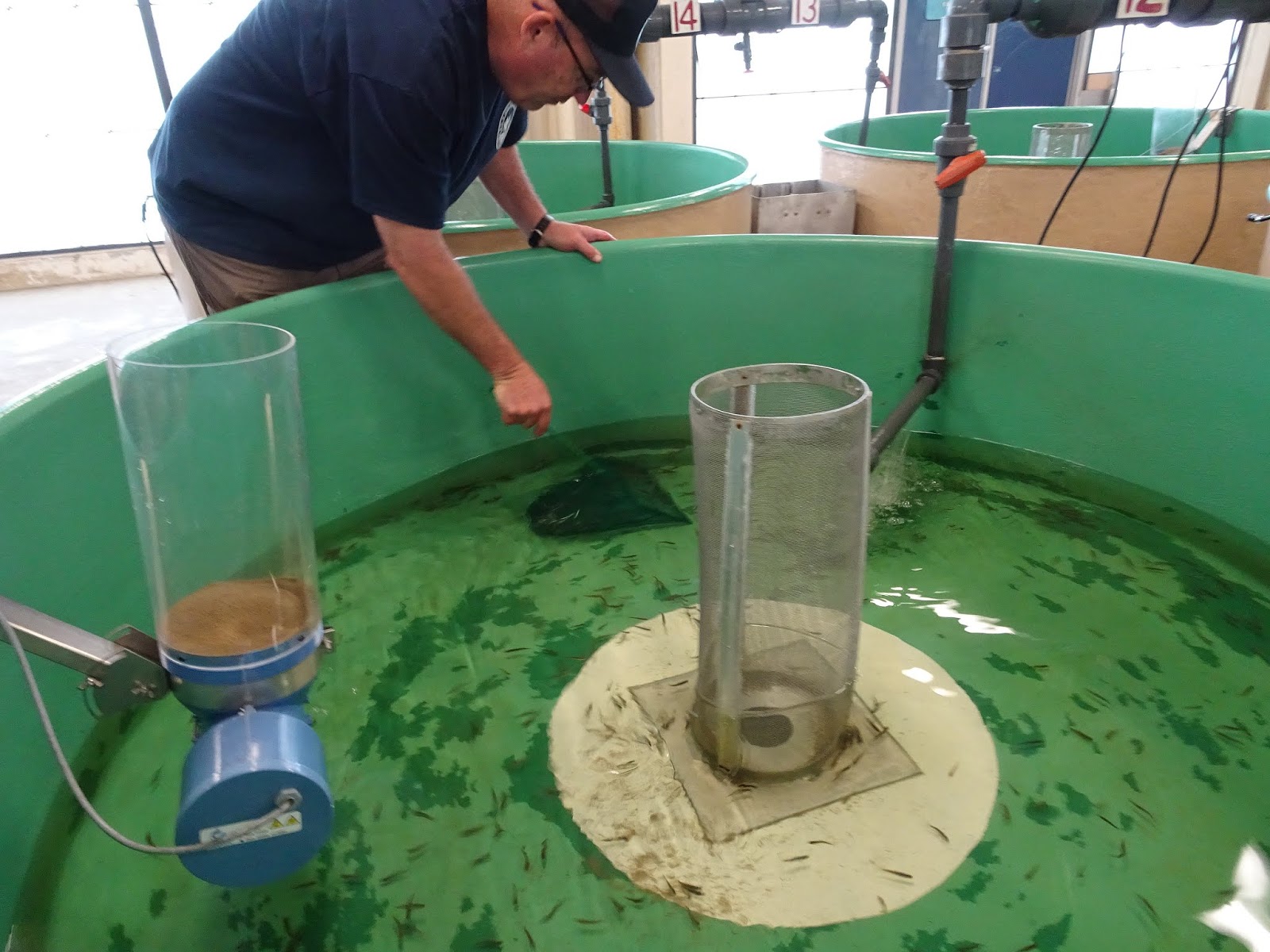
Our little fry have grown enough to be transferred to the large outdoor tanks.  A lot of math is involved determining how many fish it takes to make a pound.

A certain weight of fish is taken from each of the 52 indoor tanks and transferred to either a 20’ or 30’ tank outside.  The large 30’ tanks receive 40,000 fish!

Our job was to help wrangle all the little fish with our little nets and get them into a bucket for weighing.

Two buckets on the scale.

When the tanks start getting low on fish, they get harder and harder to catch.

Round ‘em up!


At one point we had 6 people working on each tank!


Can you guess how many fish in a bucket?


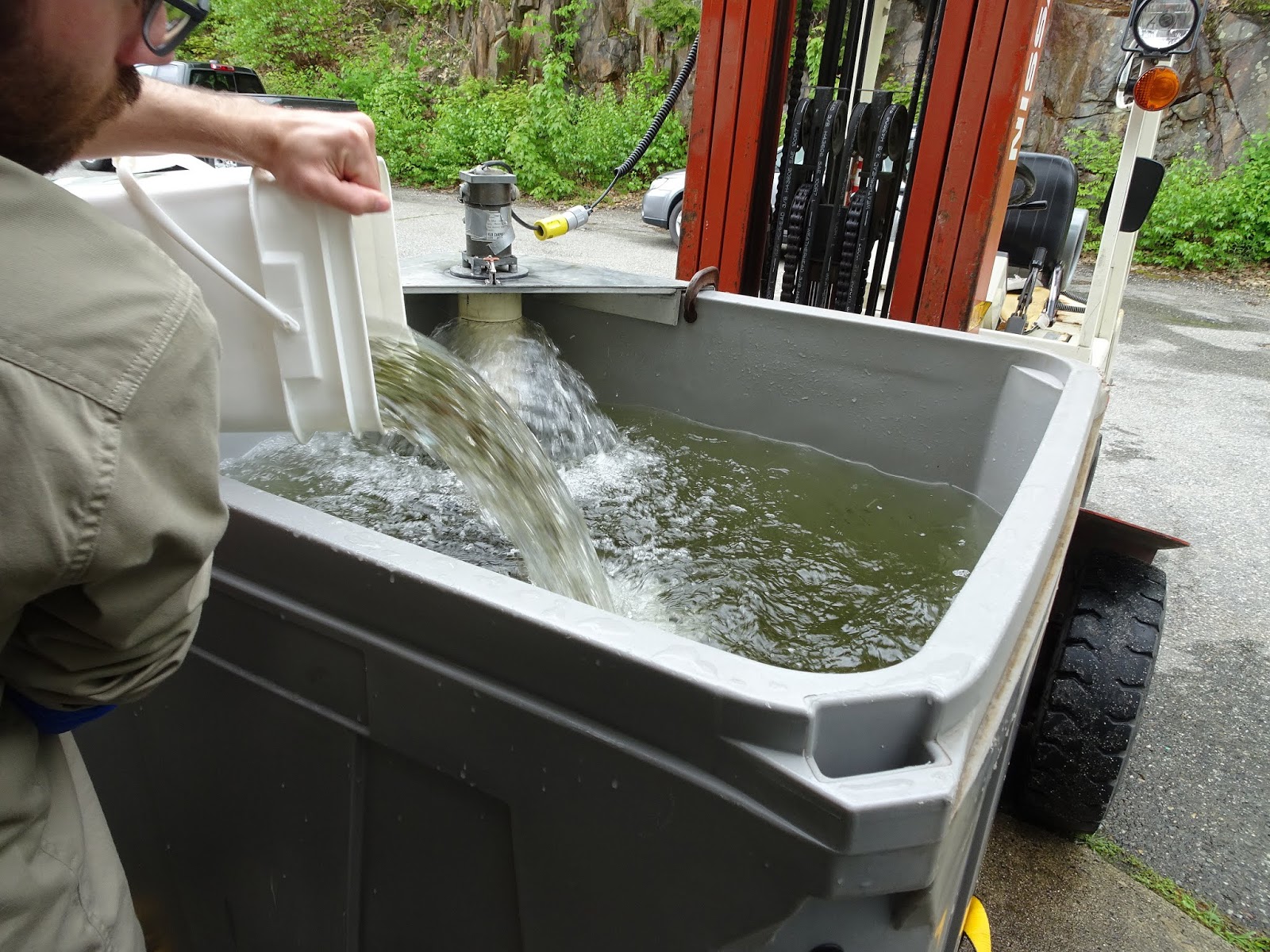
The small buckets are transferred to the large tub to be transferred to the outside tanks.


Move ‘em out!


They will get used to all the extra space soon and will spread out.

Black areas are Atlantic Salmon.

Monday, June 10, 2019

Dead Space

Last year we helped clean out an old wood pellet storage room. If you've seen a wood pellet stove for home use, you know that the pellets are sold in 50 pound bags that are easy to handle. But for an operation the size of a fish hatchery, things were done on a much larger scale!

Wood pellets were used for heating the hatchery building back during the energy crisis of the 1970's. They were delivered by a tanker truck and transferred into a large steel silo outside of the hatchery.  From that silo they were fed by auger into this large inside storage room.  From the storage room they were fed into the hatchery boiler system to heat the buildings and the water used in the hatchery. 


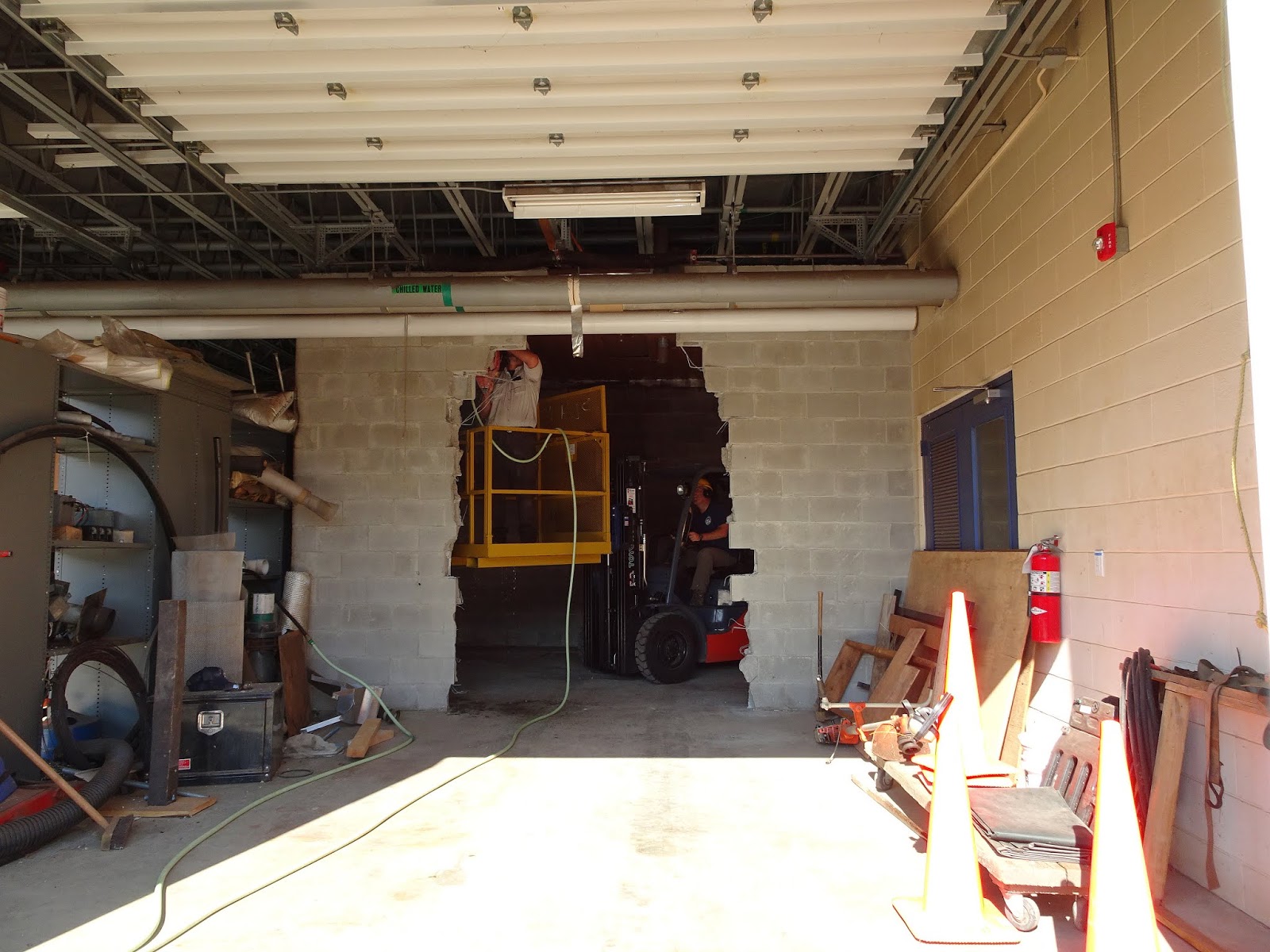
Pellet fuel hasn’t been used at the hatchery for many years but the large storage room was still full of old pellets. The only way to get them out was to break open a cinder block wall and use a tractor to scoop out the old pellets. Unfortunately, I didn't get a picture of the thousands of pounds of pellets still in the room.


I helped vacuum and sweep the remaining pellets from the floor and the dust that clung to the walls.

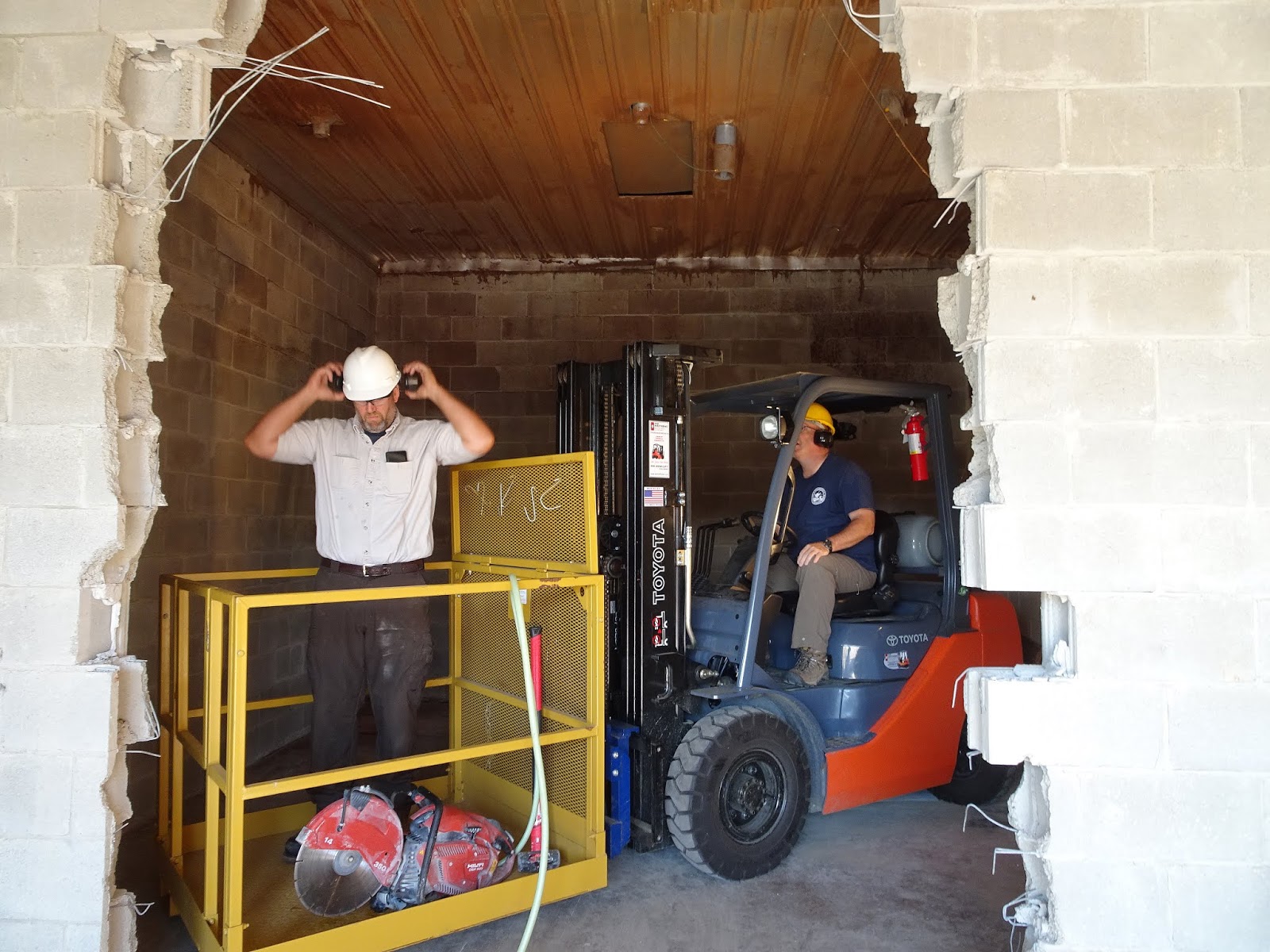
Mark and the head of maintenance (Craig) took turns using a gasoline powered concrete saw to finish taking out the front wall.

The concrete saw is lying in the bottom of the lift.

The person using the saw would be lifted up then slowly lowered as the saw cut down the wall.


A sledge hammer came in handy!


After the wall was cut out we spent a lot of time cleaning out all the concrete blocks, dust, and debris.

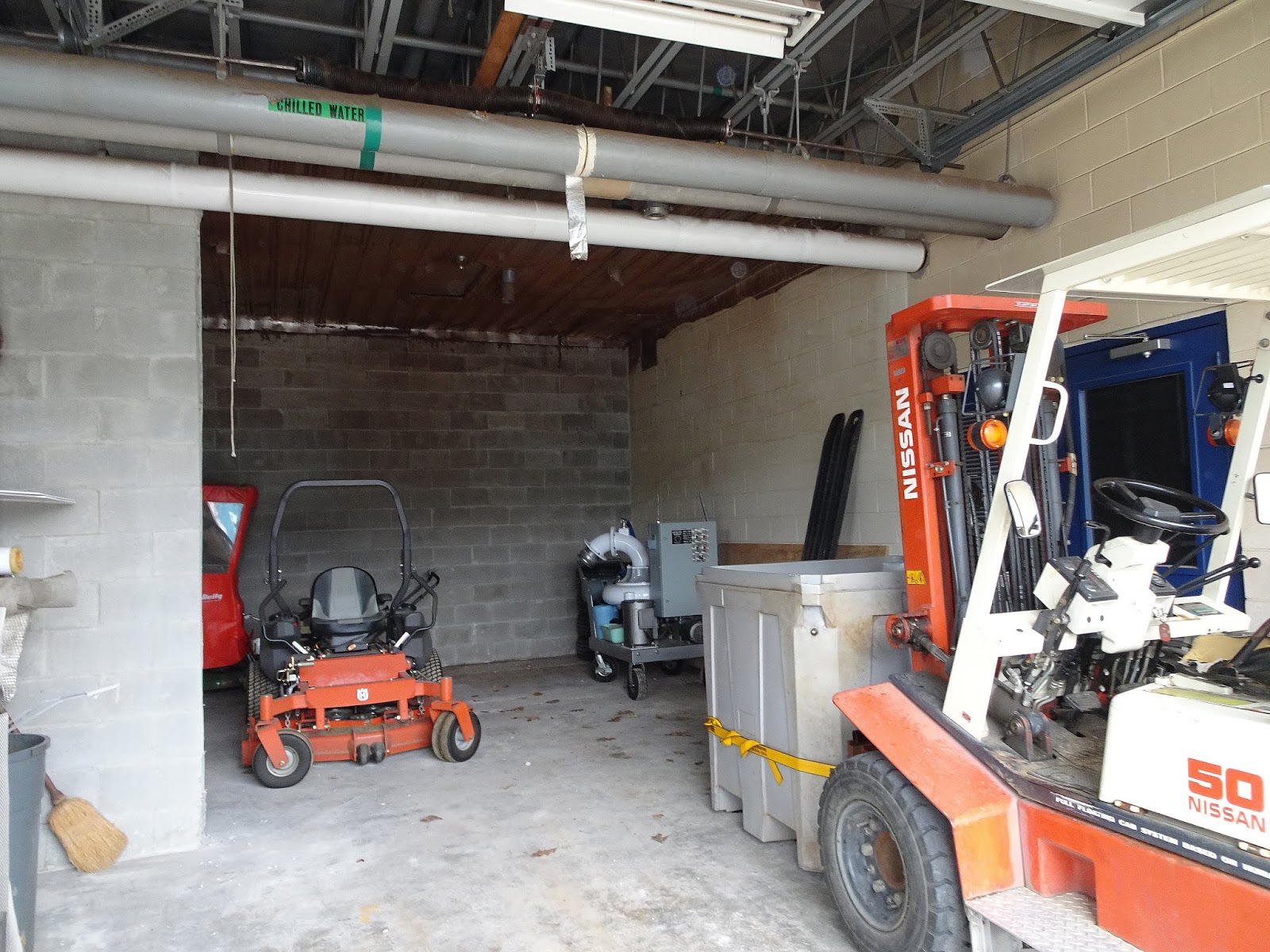
When we came back this year it was nice to see all our hard work being put to good use.  It's a great area to keep all the mowing equipment in one place.

Look how nice and straight that side wall is!

The old pellet area is now being used to store mowers, snow blowers, and other equipment that always seemed to be in the way out in the main shop. It is great to see this previously "dead" space back in use.

Friday, June 7, 2019

Holbrook Island Sanctuary

Although we spent 4 1/2 months here last year, we are finding new places to visit this summer. We learned about a nearby state park called the Holbrook Island Sanctuary and decided to give it a look.

In 1971 Anita Harris, a long-time area resident, donated 1,230 acres to the State of Maine in order "to preserve for the future a piece of the unspoiled Maine that I used to know." In keeping with her vision the Sanctuary will not be altered with modern park facilities and is essentially a network of old roads, paths, and trails.

Penobscot Bay

The park includes shoreline on Penobscot Bay and Smith Cove which eventually open into the Atlantic Ocean.  The tides here are significant, running about ten feet from high tide to low twice each day.


This dock gives an idea of how much the tides change the water level. They hadn't installed it yet this year, but a hinged ramp is attached to a floating platform that allows access to the water as it rises and falls. 

There are a number of trails in the park, and we hiked two of them. Along the way the spring migrants were singing and trying to attract mates. 

Yellow Warbler

This Yellow Warbler male was looking mighty fine with his red pinstripes. 

Magnolia Warbler

A Magnolia Warbler was singing his best song in the hopes of attracting a mate. 

Red-eyed Vireos are not as colorful as Warblers, but their incessant "Here I am...Where are you..." song was everywhere in the forest.

Red-eyed Vireo

Maine forests are cool, and green, and covered with moss. Unfortunately there are also plenty of Black Flies this time of year, but we've got some pretty good insect repellent and haven't been bothered too badly. 


As we left the park we saw that the lobster fishermen were preparing for another season. This place had hundreds of lobster pots stacked up and ready to go. 


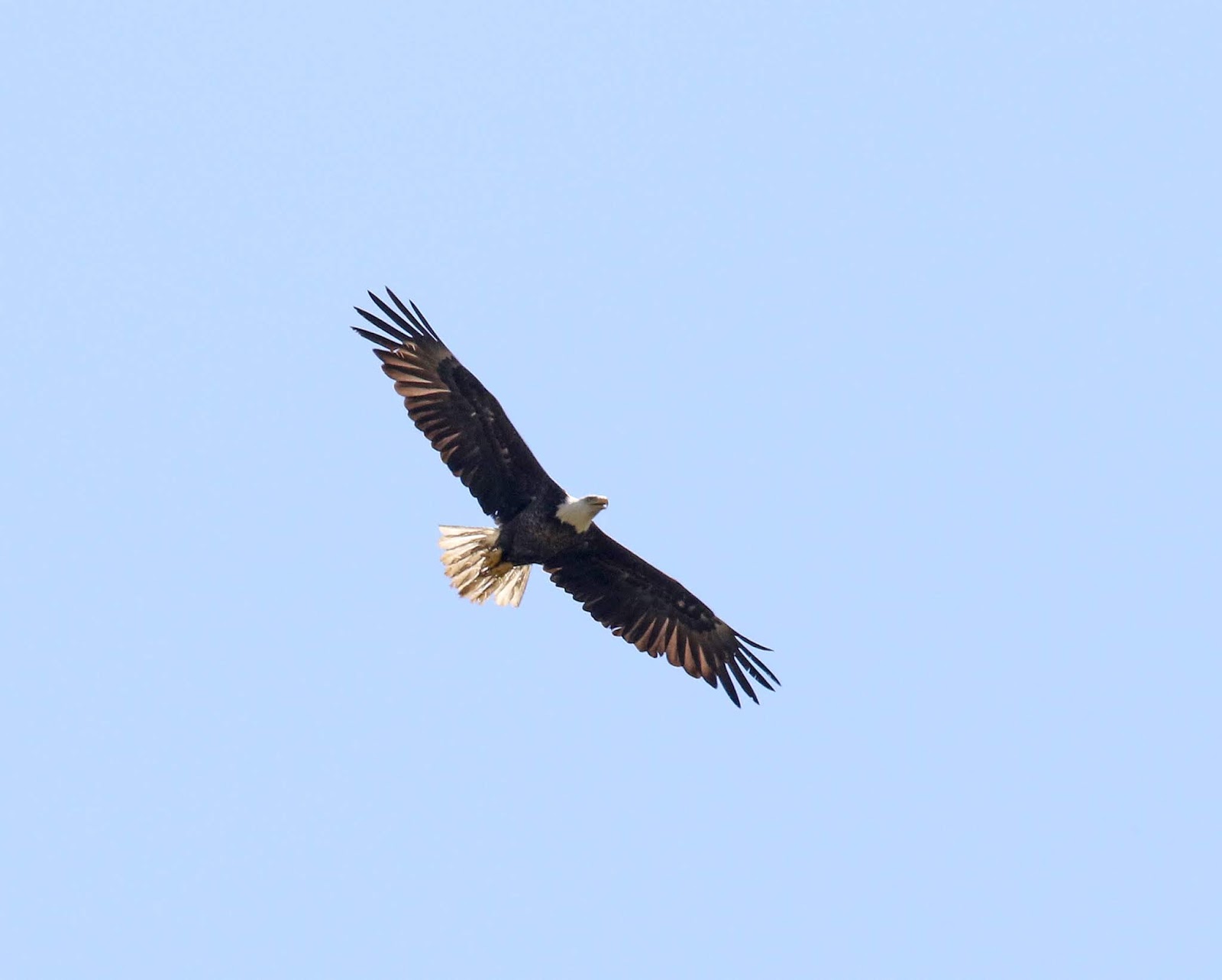
Our final bird of the trip was an adult Bald Eagle flying over the road. What a nice way to end a day of exploration.

Bald Eagle

Monday, June 3, 2019

Hiking Trails at the Hatchery

One of our jobs last year was to blow the leaves and debris from the 2 1/2 mile hiking trail.  It was very late in the summer before we got to them.  The trail hadn’t been cleared in over five years and was a mess and very hard to follow.

This year we decided to take the blower out as soon as we got here.  Since it’s only been about 8 months since we cleared the trail last year, we didn’t think it would be too bad.

Boy were we wrong!


There were a few trees down on the trail.  Most of them Mark was able to move but a few of them will have to be cut with a chain saw. 


The trail is hard to follow.  There are a few green arrow markers (more are needed).


We had walked the trail a few times last year so Mark didn’t have too much trouble finding the right route.  I followed behind with loppers cutting back tree limbs that were over the trail.


The trail looks great!  


We will probably clear it a couple more times this year just to keep on top of the mess.