Friday, October 6, 2023

Colombia 2023 - Day 4

8/25/2023 Friday

We enjoyed breakfast at the same local café as yesterday, and then headed to Parque Puente Sopo, a nice mixed activity municipal park. 

Our main target was the endemic Bogota Rail. Rails are notoriously secretive marsh birds, and this one is found in only a few locations around Bogota. The previous "go-to" spot on private land had a new owner and visitors were no longer welcomed. Daniel had heard that this public park might have them and so we were here to give it a try. 

There was a walking trail that circled a marshy pond area, and we set off along this trail. Within just a few minutes we spotted a rail making its way through the marshy grass, and sure enough it was a Bogota Rail. 


Bogota Rail

There were several Bared-faced Ibis working the same area as the Rail, and a couple of Silver-throated Spinetails (another endemic) in the shrubs next to the water. 

Bare-faced Ibis

Silvery-throated Spinetail

Another section of the park had a large open pond where we saw Andean Ducks, which are very similar to the Ruddy Ducks found in the US. At one time they were considered to be the same species. 

Andean Duck - male

Andean Duck - female

Once we finished at the park we headed to a place called Laguna de Fuquene, arriving around noon. The target for this location was a small brown bird called the Apolinar's Wren, an endemic with a small distribution in Central Colombia.  

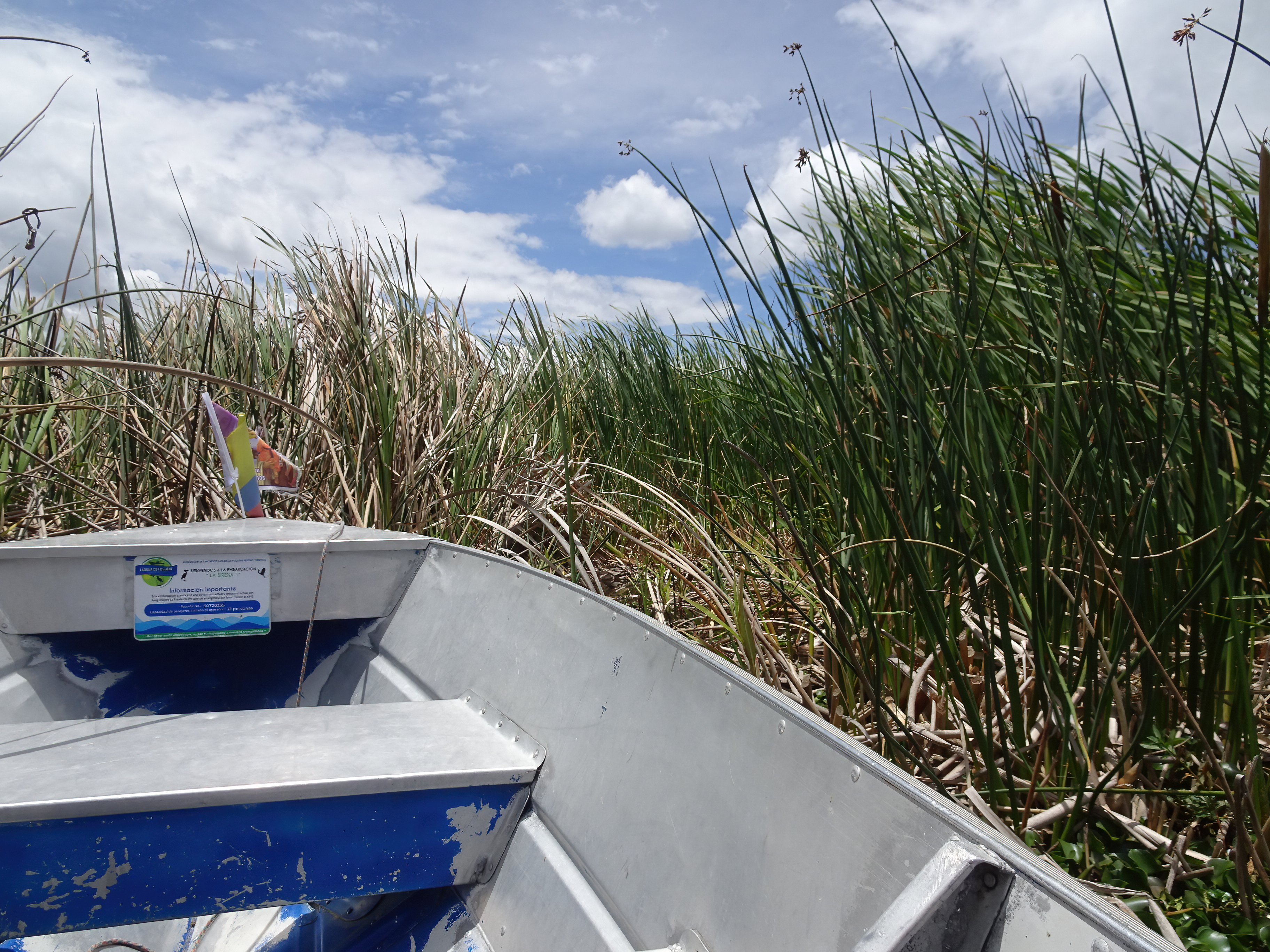
Daniel mentioned the possibility of trying to find this bird from shore, but when we arrived we saw that a program to remove invasive Water Hyacinth had really torn up the shoreline. So Daniel went to Plan B, hiring a boat to take us out to less disturbed areas. 

As we waited near the dock we spotted a rare Spot-flanked Gallinule, a bird commonly found in Chile, Argentina and Southern Brazil, but with a small presence in Colombia. We were lucky to see it.


Spot-flanked Gallinule

We headed out in the boat, finding that it was very windy which made birding tough. We did a lot of trolling alongside reeds, playing calls. 

Here birdy, birdy...

We heard a couple of birds answering back, but no sighting. We did finally get short glimpses of two different birds, but no pictures. 

While we were out we found a few Yellow-hooded Blackbirds, which are virtually identical to our Yellow-headed Blackbirds. 
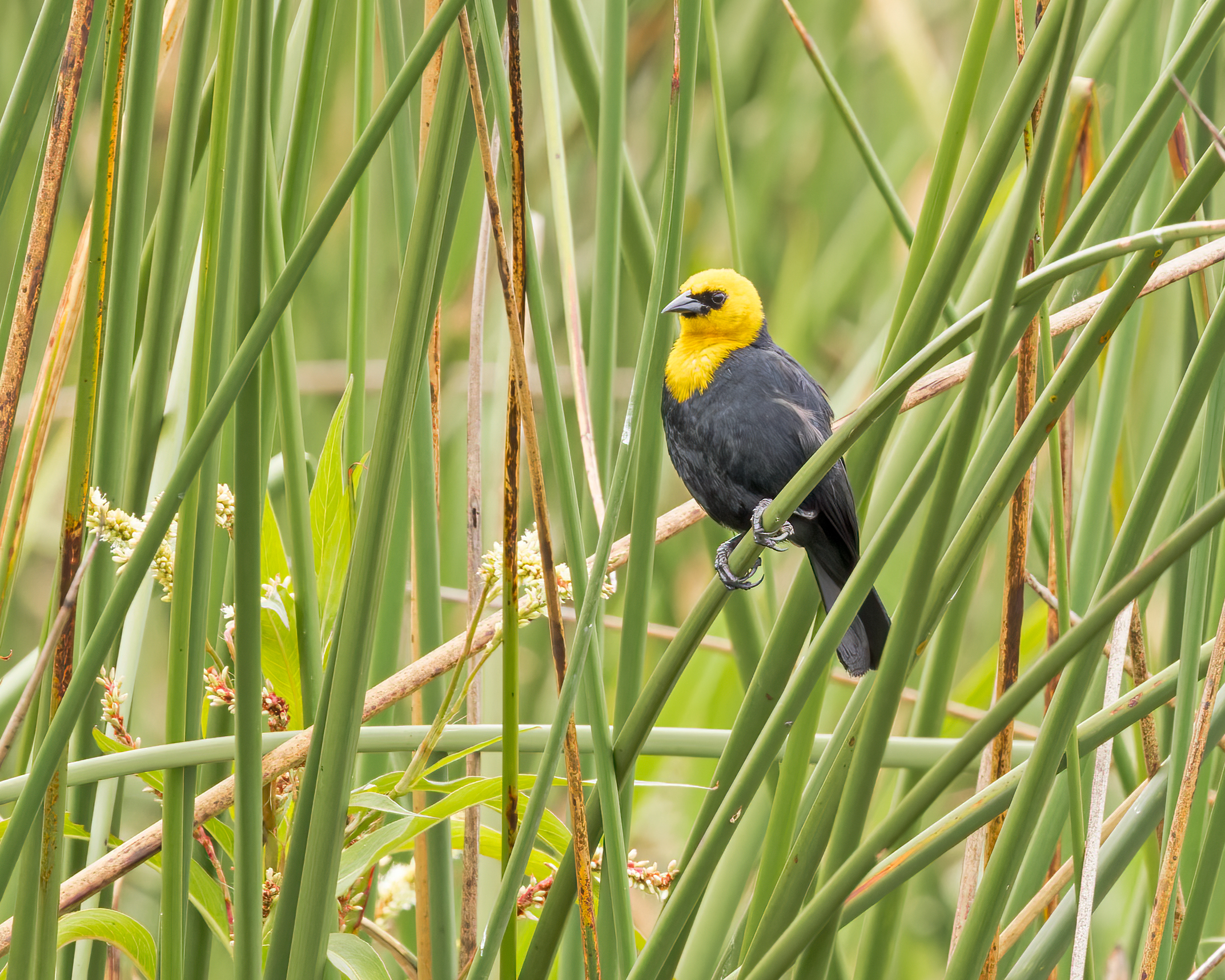
Yellow-hooded Blackbird - male

On the other hand, we also saw American Coots, which are the same species we have in the US, but these look a little different with a yellow area on their bill.

American Coot

We had some driving to do after finishing up at the lagoon. We stopped at 2:00 for lunch at a roadside sandwich stand, and then at 4:30 in the Villa de Leyva town plaza for coffee/hot chocolate at a sidewalk café.  The 3.5 acre plaza is the largest in Colombia and one of the largest in South America. Most town squares are more parklike with grass and trees, but this one was entirely stone. Perhaps the high elevation here was a factor?


We finally arrived at Rogitama Lodge at 6:00.  This is a property owned by a retired doctor who has taken what was originally a cow pasture and restored it to forest over the past forty years. 

It had been a long day with a lot of driving, so we were happy to get into our warm, comfortable beds. 


Next - Two new hummingbirds and another new hotel.


Thursday, September 28, 2023

Colombia 2023 - Day 3

8/24/2023 Thursday

We had breakfast at a nearby café that was very nice. I had a breakfast tamal which had chicken, pork, carrot, peas and was wrapped in a banana leaf rather than corn husk. Quite different than the Mexican style tamales that we eat in Texas, but very good. We also picked up some sandwiches for our lunch in the field today.

We drove up the mountains to Paramo de Guasca. Paramo is a word used to describe the alpine tundra and the Andes.  It is above the tree line with a specific community of plants and animals. It is generally cool and often misty.

Our first stop along the road was great with excellent looks at Black-chested Mountain Tanager and Golden-crowned Tanager. 


Black-chested Mountain-Tanager


Golden-crowned Tanager

We also saw the endemic Bronze-tailed Thornbill, a high elevation hummingbird with a green and pink gorget. 


Bronze-tailed Thornbill

A colorful Scarlet-bellied Mountain-Tanager made an appearance, along with some less flashy birds. 

Scarlet-bellied Mountain-Tanager

Black-capped Tyrannulet

Slaty Brushfinch

White-chinned Thistletail

As we continued up into the paramo we entered a thick fog layer which made it difficult to see, let alone bird. So we drove over the top, and headed down the other side to what was planned to be our after-lunch birding area. This was at a lower elevation and out of the fog.  It was a very pretty area.

As we were driving along Teri spotted a bird in a roadside tree.  Daniel had to drive on a couple of hundred yards to find a parking place on the narrow road, and as we started to walk back we found a Black-billed Mountain-Toucan! It turned out to be the only one we'd see on the trip. 


Black-billed Mountain-Toucan

One of our target birds at this location was the difficult to find Brown-breasted Parakeet. This endemic is found in only a few mountainous areas around Bogota. Daniel said that we'd likely hear them before we saw them, if we saw them at all.  We'd been in the area for a couple of hours when we heard a noisy racket, and sure enough a group of eight flew into a treetop a couple of hundred meters away. We never got to see them any closer than that. 

Brown-breasted Parakeets

Around noon we moved on to La Guajira Nature Preserve, a small property that Daniel knew of with active hummingbird feeders. We enjoyed our lunch on the porch of the house and watched a variety of birds at the feeders and in the garden. 


We saw our first Mountain Velvetbreast, a hummingbird with a downcurved bill. 

Mountain Velvetbreast - male

Mountain Velvetbreast - male

Mountain Velvetbreast - female

We got much better looks at Sword-billed Hummingbirds than we'd had the previous day. 

Sword-billed Hummingbird - male

Sword-billed Hummingbird - female

We had a visit by a Pale-naped Brushfinch that was eating ground corn that had been put out. 

Pale-naped Brushfinch

In all we saw eleven different hummingbird species. 

Blue-throated Starfrontlet - female

Blue-throated Starfrontlet - male

Longuemare's Sunangel

Sparkling Violetear

Tyrian Metaltail

We left at 1:20, did some birding along the road. Our best find was a pair of Powerful Woodpeckers. They are over a foot tall and really striking. 

Powerful Woodpecker - female

Powerful Woodpecker - male

The plan was to return to the Paramo and continue birding, but it was still fogged in. We stopped at a wetland overlook for a variety of common wetland birds, as well as the only Black-backed Grosbeak of the trip.  

Black-backed Grosbeak

As we approached Guatavita we checked out a tourist attraction that we noticed on our way out this morning. It is an upside down house with a little restaurant and ice-cream booth alongside. There was no real explanation for how it came to be there, but it was interesting, and the ice-cream was refreshing!


We returned to the hotel about 5:00.  The “early” finish was a welcome treat as we were pretty pooped. We ate at the same little restaurant as the previous night, once again enjoying fresh pizza. 

Next - Search for the Bogota Rail and a boat ride.